


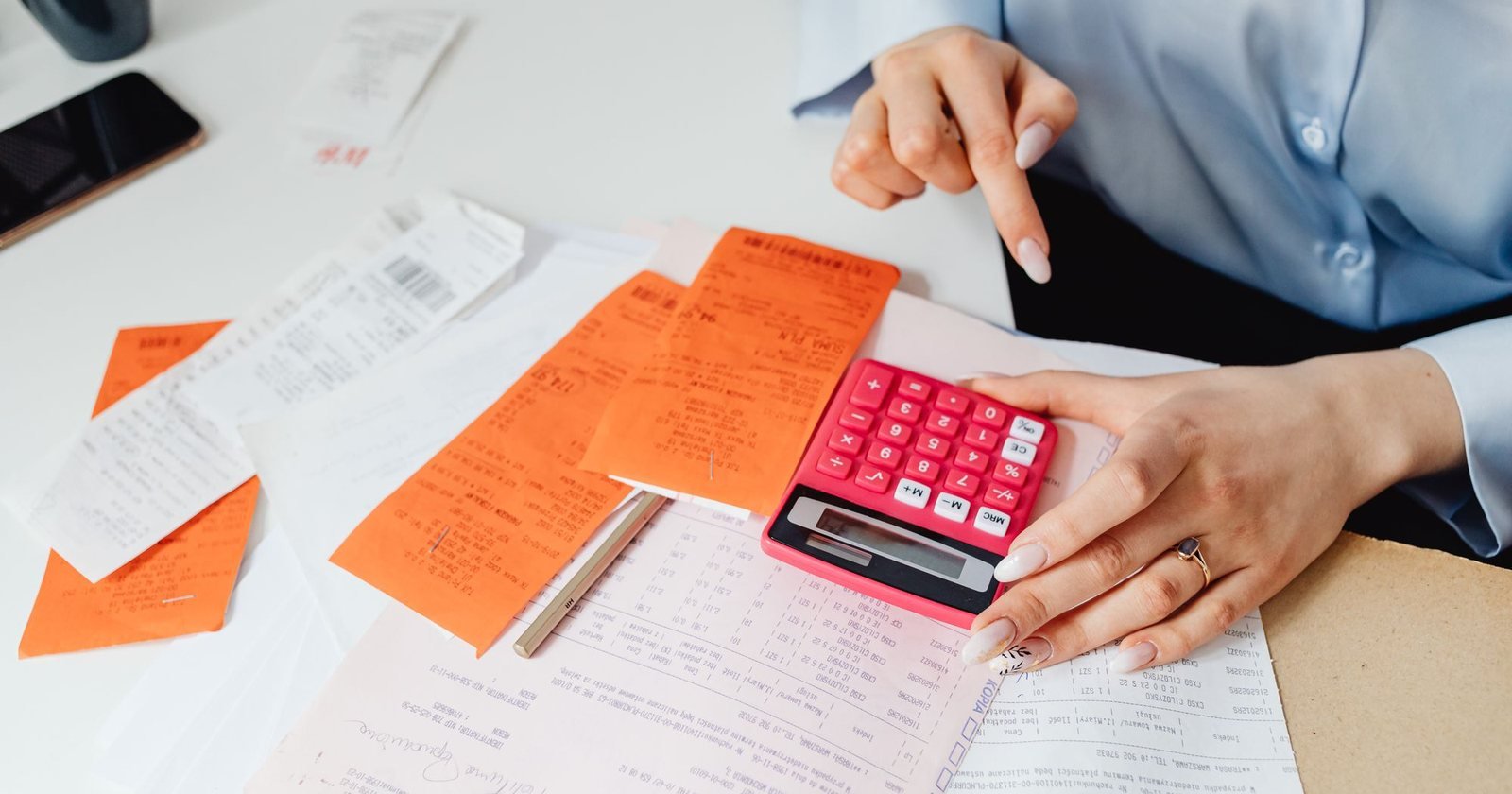
Allowable expenses are the everyday business costs a sole trader can take off their income before working out tax. If you spend money wholly and exclusively on your self-employed work — stock, tools, business travel, your accountant’s fee — you can usually claim it, so you pay tax on your profit rather than everything you earned. This guide is for UK sole traders, freelancers and contractors. It explains what you can claim, what HMRC won’t allow, how home and car costs work, and the records you need to keep.
What counts as an allowable expense?
An allowable expense is a cost you take on purely to run your business. If money leaves your account only for your self-employed work, it normally reduces your taxable profit. Costs that are part business and part personal count only for the business share.
HMRC calls this the “wholly and exclusively” rule. A web designer’s software subscription passes the test. A coat you wear to client meetings and everywhere else does not, because it also has a personal use. Where a cost is genuinely split — a mobile phone used for work and family — you claim a fair business percentage and keep a note of how you worked it out.
Most sole traders now use the cash basis, which became the default from April 2024. You record income when it lands and expenses when you pay them, and you can usually claim everyday equipment as an expense rather than through capital allowances. You can read HMRC’s own summary of expenses if you’re self-employed for the full detail.
Allowable expenses sole traders can claim
Most self-employed costs fall into a handful of categories. If a cost sits in one of these and it was for the business, it is usually allowable:
- Office costs — stationery, printing, postage, business phone and broadband, software subscriptions
- Stock and materials — goods bought for resale and raw materials
- Staff and subcontractors — wages, subcontractor payments, employer National Insurance
- Business premises — rent, business rates, heating, lighting and insurance (or a share of home costs if you work from home)
- Travel and vehicle — business mileage, fuel, train and bus fares, parking
- Clothing — uniforms and protective gear, but not everyday clothes
- Financial costs — business insurance, bank and card charges, interest on a business loan
- Advertising and marketing — your website, online ads, directory listings
- Professional and training costs — accountant and bookkeeper fees, and training that updates skills you already use in the business
| Category | Common examples | Watch out for |
|---|---|---|
| Office | Stationery, software, business phone | Only the business share of a mixed-use phone or broadband |
| Travel | Business mileage, train fares, parking | Your normal commute is not allowable |
| Clothing | Branded uniform, safety boots | Everyday clothing is never allowable |
| Premises | Rent, rates, a share of home bills | Keep the calculation behind any home-working claim |
| Financial | Insurance, bank fees, loan interest | Personal account fees do not count |
Travel and vehicle costs
You can claim the cost of journeys made for business, but not your ordinary commute or private trips. There are two ways to handle a vehicle you also use privately.
The first is actual costs: you total fuel, insurance, repairs, servicing and so on, then claim the business proportion. The second is simplified mileage, a flat rate per business mile that covers running costs. For the 2026-27 tax year the flat rate is 55p per mile for the first 10,000 business miles and 25p per mile after that, which rose from 45p on 6 April 2026. Motorcycles use a lower flat rate — check the current figure on GOV.UK.
As an example, a tradesperson who drives 8,000 business miles in the year and uses the flat rate can claim 8,000 × 55p = £4,400. Once you pick the flat rate for a vehicle, you keep using it for that vehicle. Compare both methods for details, see GOV.UK simplified expenses.
Working from home
If you run your business from home, you can claim a share of your household running costs. Again there are two routes.
The simplified flat rate is available when you work 25 hours or more a month from home. It is based on hours:
| Hours worked at home per month | Flat rate per month |
|---|---|
| 25 to 50 hours | £10 |
| 51 to 100 hours | £18 |
| 101 hours or more | £26 |
The flat rate covers heating, electricity and similar running costs, but not your phone or broadband, which you claim separately for business use. The alternative is to work out a fair proportion of actual bills based on the rooms you use and the time you spend working. If your real home-working costs are high, the actual-cost method can be worth the extra record-keeping.
Not sure if a cost is allowable?
Expenses are where sole traders most often over- or under-claim. If you are unsure about a particular cost, send Accounteezy the details and we will tell you how HMRC treats it.
Expenses you cannot claim
Some costs are never allowable, even when they feel business-related. Claiming them is a common reason returns get questioned. The main ones to avoid are:
- Everyday clothing — a suit or smart outfit, even if you only wear it for work
- Client entertainment — meals, drinks or events to entertain clients or suppliers
- Fines and penalties — parking tickets, speeding fines and late-filing penalties
- Personal costs — anything for you or your household rather than the business
- The private share of a mixed cost — only the business proportion is allowable
- Your own wages or drawings — money you take out of the business is not an expense
Simplified expenses or actual costs — which is better?
Neither method is automatically better; it depends on your numbers. Simplified expenses use flat rates and cut down the admin. Actual costs can produce a larger claim but need fuller records.
| Simplified (flat rate) | Actual costs | |
|---|---|---|
| Effort | Low — a flat rate | Higher — total and apportion real bills |
| Best for | Lower mileage and modest home use | High mileage or high home-running costs |
| Records needed | Hours or business miles | Every receipt and a usage split |
It is worth calculating both once a year for your vehicle and home costs, then using whichever gives the fairer result. A bookkeeper can track this for you so the comparison is ready at tax time.
The £1,000 trading allowance — claim it or your expenses?
Every self-employed person can use a trading allowance of up to £1,000 instead of claiming actual expenses. You use one or the other, not both.
The choice is simple. If your real business expenses for the year are less than £1,000, claim the trading allowance because it gives more relief for no paperwork. If your expenses are more than £1,000, claim your actual costs instead. And if your total self-employed income for the year is £1,000 or less, the allowance usually covers it and you may not need to report that income at all. The current rules are on GOV.UK’s trading allowance guidance.
Keeping records for your expenses (and Making Tax Digital)
Every expense you claim needs evidence. Keep receipts, invoices, bank statements and a mileage log, and hold on to them for at least five years after the 31 January submission deadline for that tax year. Good records also mean you claim everything you are entitled to rather than guessing at the last minute. Once your expenses are recorded, our guide to sole trader accounts shows how to total them into a profit and loss using HMRC’s own categories.
How you keep those records is changing. Under Making Tax Digital for Income Tax, sole traders will need to keep digital records and send HMRC quarterly updates using compatible software. It is arriving in stages based on your qualifying income:
- From April 2026 — qualifying income over £50,000
- From April 2027 — qualifying income over £30,000
- From April 2028 — qualifying income over £20,000
The expense rules themselves do not change under Making Tax Digital — what changes is that your income and expenses need to be recorded digitally through the year. Getting your bookkeeping tidy now makes that switch painless. Our sole trader bookkeeping guide walks through a simple monthly routine, and the Accounteezy bookkeeping tool can help you keep expenses in order.
Common expense mistakes to avoid
- Guessing the business share of car or home costs instead of working it out and noting the method
- Claiming everyday clothing because it is only worn for work
- Losing small cash receipts, which add up over a year
- Running business and personal spending through one account, so costs get missed
- Forgetting genuinely allowable costs such as accountancy fees, insurance and software
- Trying to claim client entertainment, which HMRC does not allow
Frequently asked questions
What expenses can I claim as a sole trader?
You can claim costs incurred wholly and exclusively for the business, including office costs, stock, staff and subcontractors, business travel, a share of home or premises costs, uniforms, business insurance and bank charges, advertising, and professional fees such as your accountant. Everyday clothing, client entertainment and fines are not allowable.
Can I claim working from home as a sole trader?
Yes. If you work 25 hours or more a month at home you can use a flat rate of £10, £18 or £26 a month depending on hours, or you can claim a fair proportion of your actual household bills. The flat rate covers running costs like heating and electricity, not phone or broadband.
Can sole traders claim mileage?
Yes. For 2026-27 you can claim a flat 55p per business mile for the first 10,000 miles and 25p per mile after that, covering your vehicle’s running costs. Alternatively you can claim the business share of actual running costs. Your normal commute does not count as business travel.
Can I claim clothing as a sole trader?
Only work-specific clothing such as a branded uniform or protective equipment. Everyday clothes are not allowable, even if you bought them purely for work, because they can also be worn privately.
What is the £1,000 trading allowance?
It is a tax-free allowance of up to £1,000 you can claim instead of your actual expenses. If your expenses are below £1,000 the allowance gives more relief; if they are higher, claim your real costs. You cannot use both in the same year.
How long do I need to keep expense records?
Keep your records for at least five years after the 31 January submission deadline for the relevant tax year. That covers receipts, invoices, bank statements and any mileage or home-use calculations.
Do allowable expenses change under Making Tax Digital?
The rules on what you can claim stay the same. What changes is how you record it: affected sole traders will keep digital records and send quarterly updates to HMRC using compatible software, phased in from April 2026 by income level.
Get your expenses claimed correctly
If you would rather not second-guess every receipt, Accounteezy can keep your bookkeeping in order all year and make sure allowable expenses are claimed properly on your Self Assessment.
Message Accounteezy on WhatsApp
See our tax return services or request a quote
This guide provides general information and does not replace advice based on your individual circumstances. Tax rules and rates can change, so check current GOV.UK guidance or ask a qualified adviser before you file.